
Burnout is no longer just a buzzword in corporate wellness — it’s a pressing issue with measurable costs. According to the World Health Organization, burnout is classified as an occupational phenomenon resulting from chronic workplace stress that has not been successfully managed. In fact, recent surveys show that over 60% of middle managers in the EU, UK, and US report symptoms of burnout, including fatigue, reduced motivation, and emotional exhaustion.
Why middle management? Because they often carry the heaviest load: managing expectations from senior leadership while supporting and motivating their teams. This dual pressure makes them particularly vulnerable. Yet with the right strategies, burnout is not inevitable — it can be prevented.
This article explores five practical strategies to prevent burnout in middle management, supported by research and case studies, and offers actionable steps that can be implemented both individually and organizationally.
Understanding Burnout in Middle Management
Why Middle Managers Are at Risk
Middle managers are the bridge between executives and employees. They translate high-level strategies into daily operations while also managing the wellbeing and productivity of their teams. This balancing act often leads to:
- Role overload – competing priorities from both directions.
- Emotional strain – being the buffer for conflicts and organizational change.
- Lack of recognition – executives receive credit for vision, while frontline teams are praised for execution, leaving middle managers overlooked.
The Organizational Impact of Burnout
Burnout in middle management doesn’t just harm individuals — it ripples across entire organizations. Symptoms like disengagement, absenteeism, and decreased decision-making quality reduce productivity and increase turnover rates. A Deloitte report revealed that 77% of professionals have experienced burnout at their current job, leading to an estimated $322 billion in lost productivity globally each year.
5 Practical Strategies to Prevent Burnout
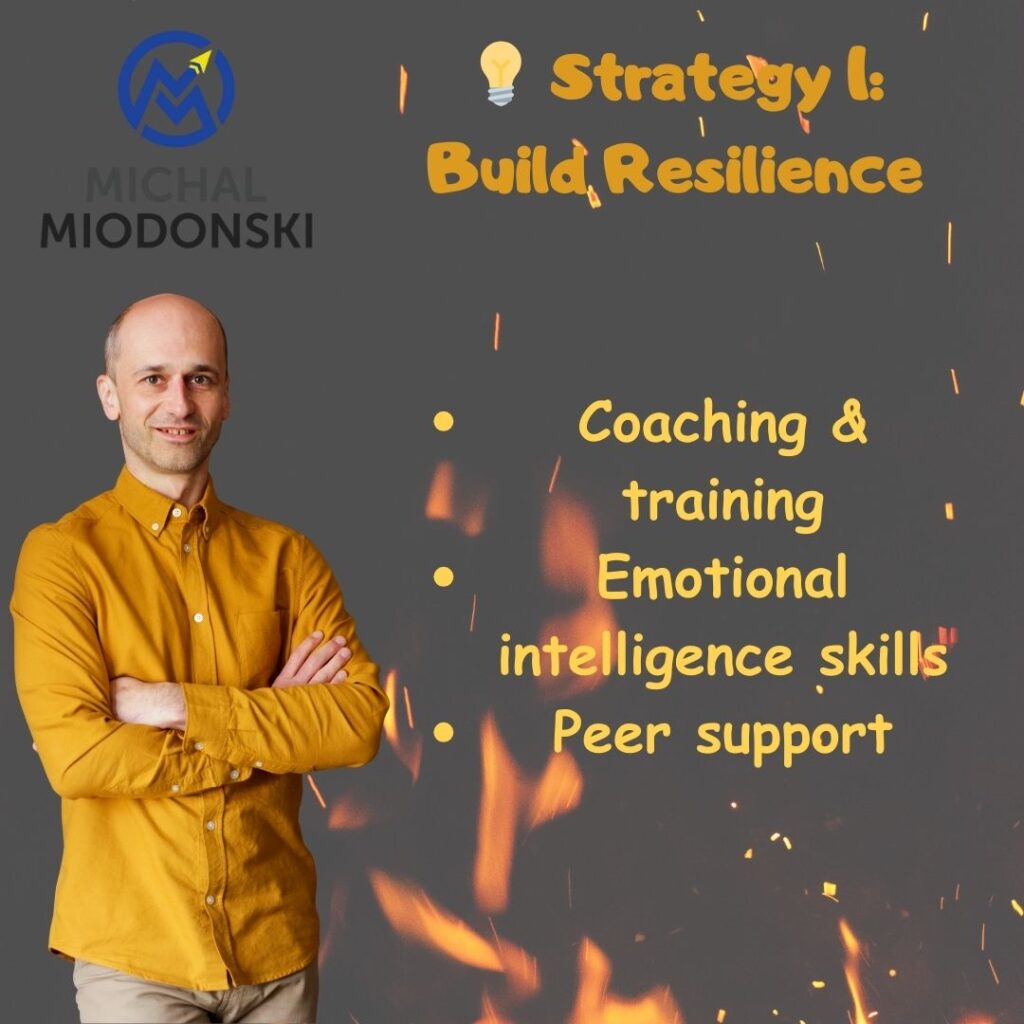
1. Build Resilience Through Training and Coaching
Resilience is the ability to adapt to stress and recover quickly from challenges. Training middle managers in resilience skills has been shown to reduce stress and increase engagement. For example, a case study from a global tech company found that managers who completed resilience coaching programs reported a 30% improvement in work-life balance and lower turnover intention.
Action Steps:
- Introduce resilience workshops focused on emotional intelligence and stress management.
- Offer 1-to-1 coaching to help managers develop personal coping strategies.
- Encourage peer support networks to share experiences and solutions.
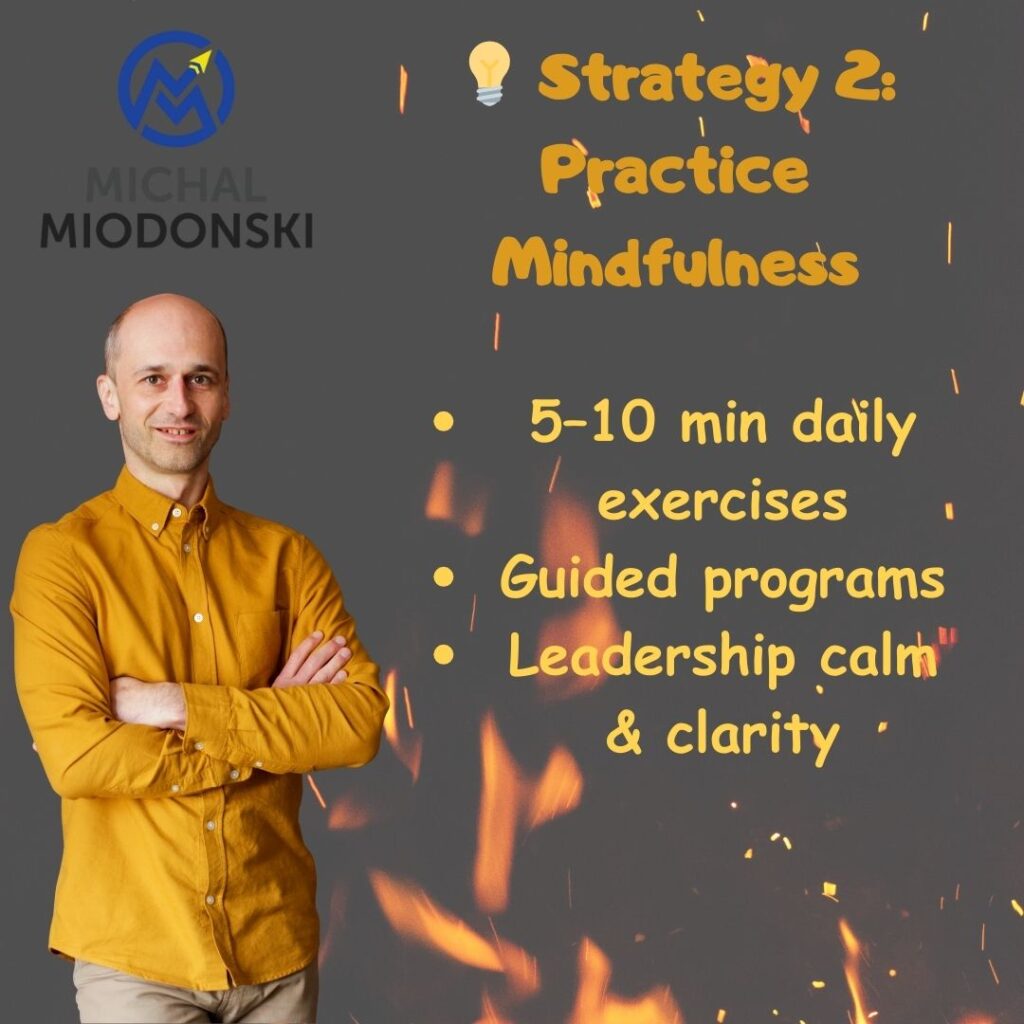
2. Implement Mindfulness Practices at Work
Mindfulness at work is not just a trend — it’s a proven method for reducing stress and improving focus. A 2023 meta-analysis in Occupational Health Science found that mindfulness interventions significantly reduced symptoms of burnout among managers.
Action Steps:
- Encourage short daily mindfulness practices (5–10 minutes).
- Provide access to structured programs such as the Mindfulness and Stress Management online course.
- Integrate mindfulness into leadership training, making calm and clarity a core management skill.
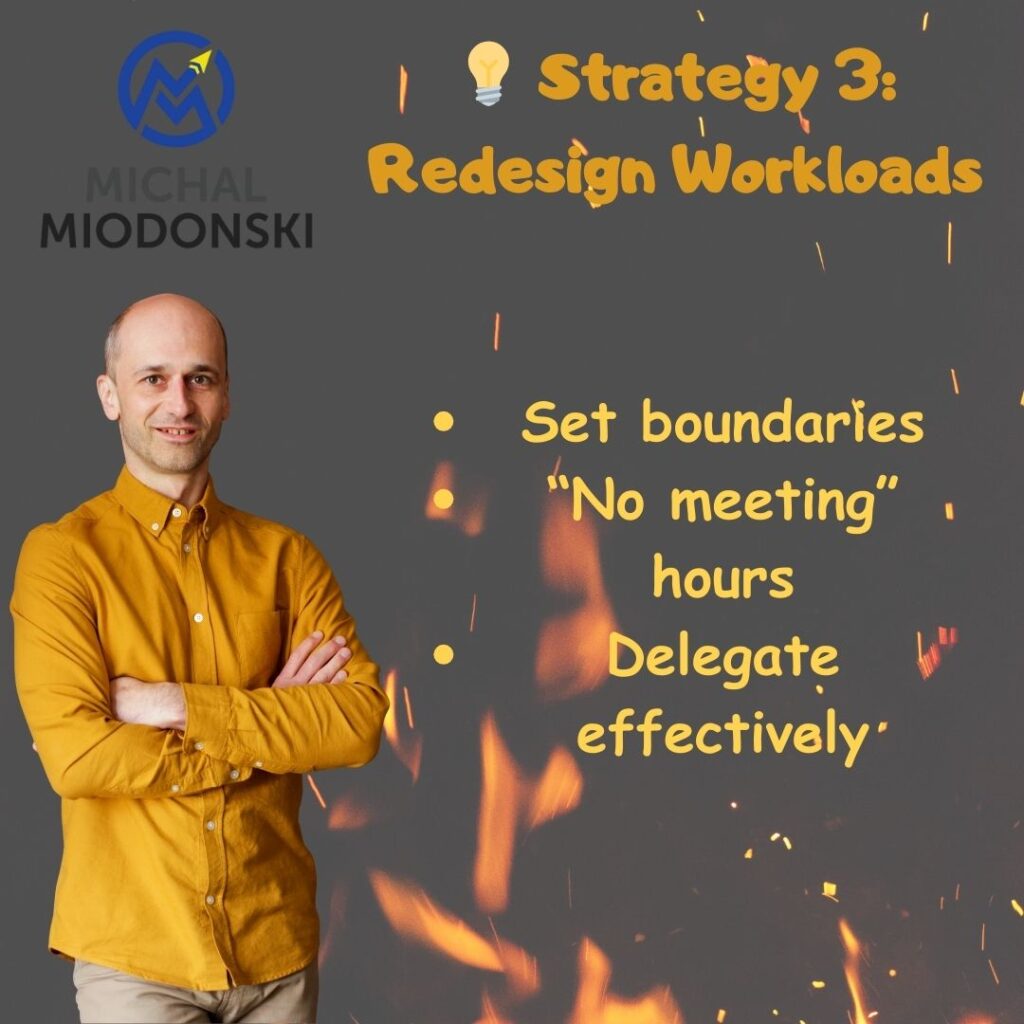
3. Redesign Workloads and Set Clear Boundaries
One of the biggest contributors to burnout is unrealistic workload expectations. Middle managers often say “yes” to everything, leaving little time for recovery. Organizations that redesign workloads and encourage boundaries report lower stress levels and improved retention.
Action Steps:
- Use workload management tools to balance responsibilities across teams.
- Set “no meeting” hours to allow deep work and recovery.
- Train managers to delegate effectively and prioritize high-impact tasks.
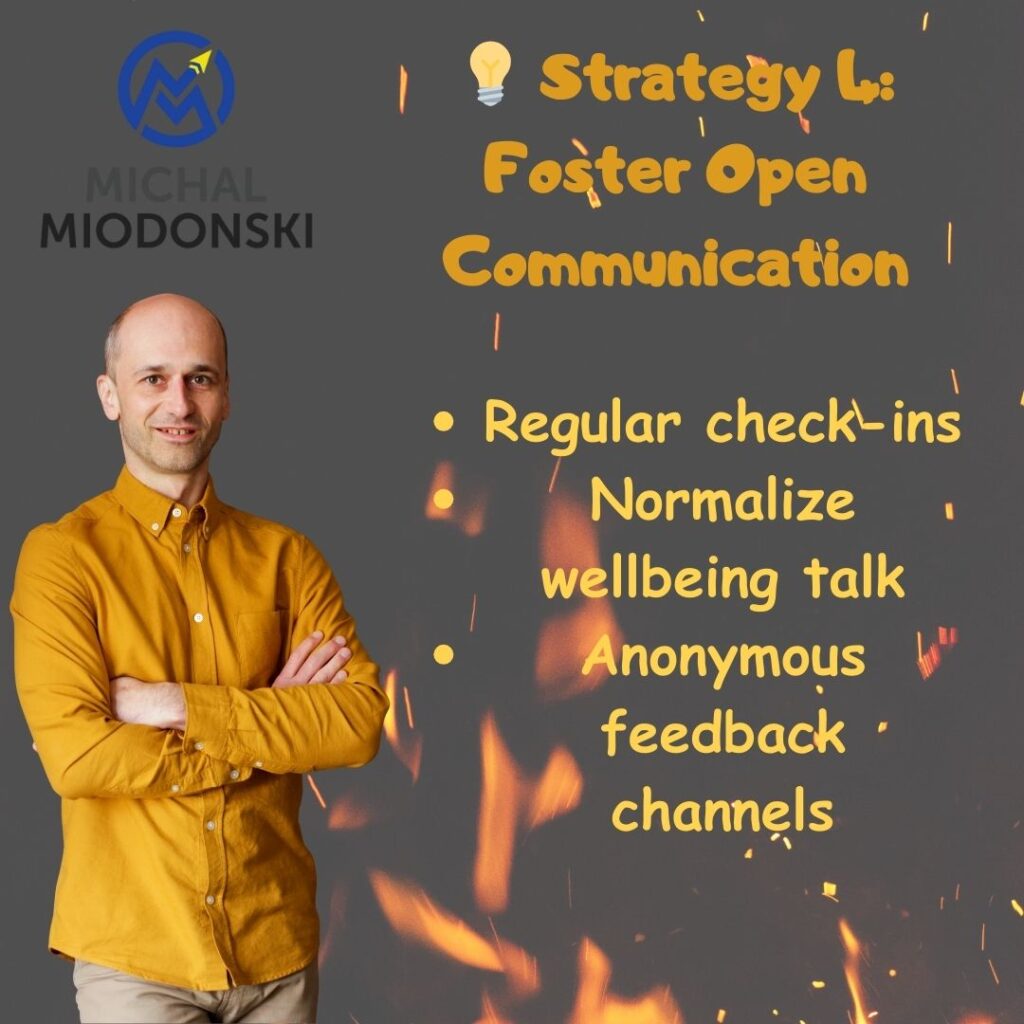
4. Foster a Culture of Open Communication
A workplace culture that normalizes conversations about stress and wellbeing helps managers feel supported. According to Gallup, employees who feel their wellbeing is supported are 62% less likely to experience burnout.
Action Steps:
- Schedule regular one-on-one check-ins with executives focused on wellbeing, not just performance.
- Encourage managers to share challenges openly without fear of stigma.
- Implement anonymous feedback channels so systemic issues can be addressed quickly.
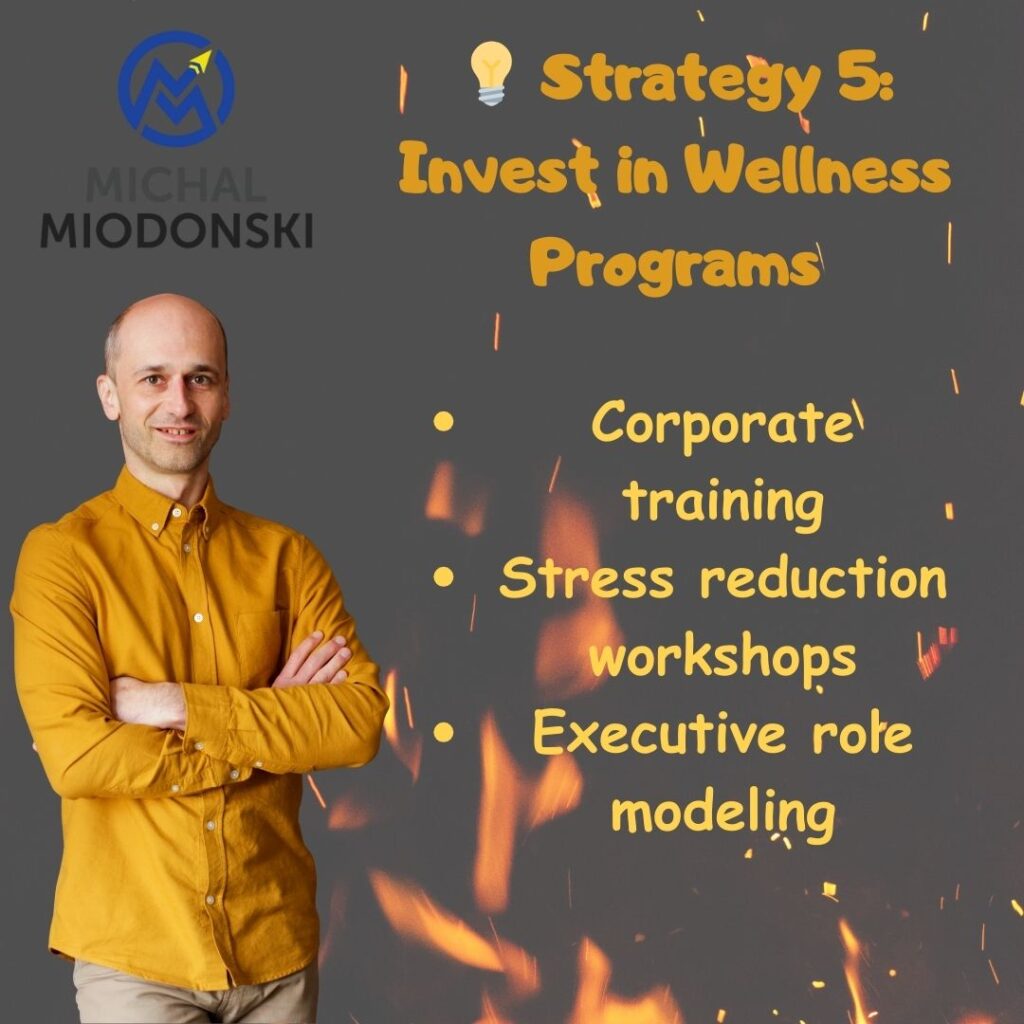
5. Invest in Corporate Wellness Programs
Sustainable prevention requires organizational commitment. Corporate wellness programs that combine training, coaching, and practical wellbeing initiatives result in healthier, more resilient managers. For example, a European financial firm reported that after rolling out a corporate wellness initiative with stress reduction training, manager absenteeism decreased by 25% within a year.
Action Steps:
- Provide regular stress management and wellness training.
- Offer access to physical, mental, and emotional wellbeing resources.
- Encourage participation by modeling wellness practices at the executive level.
Case Study – Preventing Burnout in a Manufacturing Company
A mid-sized UK manufacturing company faced high turnover among middle managers due to stress and burnout. By implementing resilience coaching, introducing a weekly 15-minute mindfulness session, and setting strict meeting-free times, the company saw:
- 40% improvement in manager engagement within six months.
- A 20% reduction in absenteeism.
- Positive feedback from managers who felt “seen and supported” by leadership.
This case highlights how even small, consistent changes can create measurable results.
Conclusion
Burnout in middle management is preventable — but it requires both personal strategies and organizational commitment. By focusing on resilience, mindfulness, workload balance, open communication, and wellness programs, companies can protect their managers and strengthen overall workplace resilience.
Call to Action
Middle managers don’t have to struggle in silence. If you want to build resilience, manage stress effectively, and perform at your best, I can help. Through 1-to-1 coaching, online group training, and corporate workshops, I work with professionals to create sustainable strategies for wellbeing and success.
👉 Start today with my online course “Mindfulness and Stress Management” and take the first step toward preventing burnout in your career and organization.
👉 Listen to my Podcast “Mindset is Everyting” on Spotify & Apple
👉 Contact me now for more